

Climate Change: Delhi burns as ground temperatures rise by 6 degrees in 10 years
Over the last 10 years, land surface temperatures in several areas of Delhi have been rising rapidly.


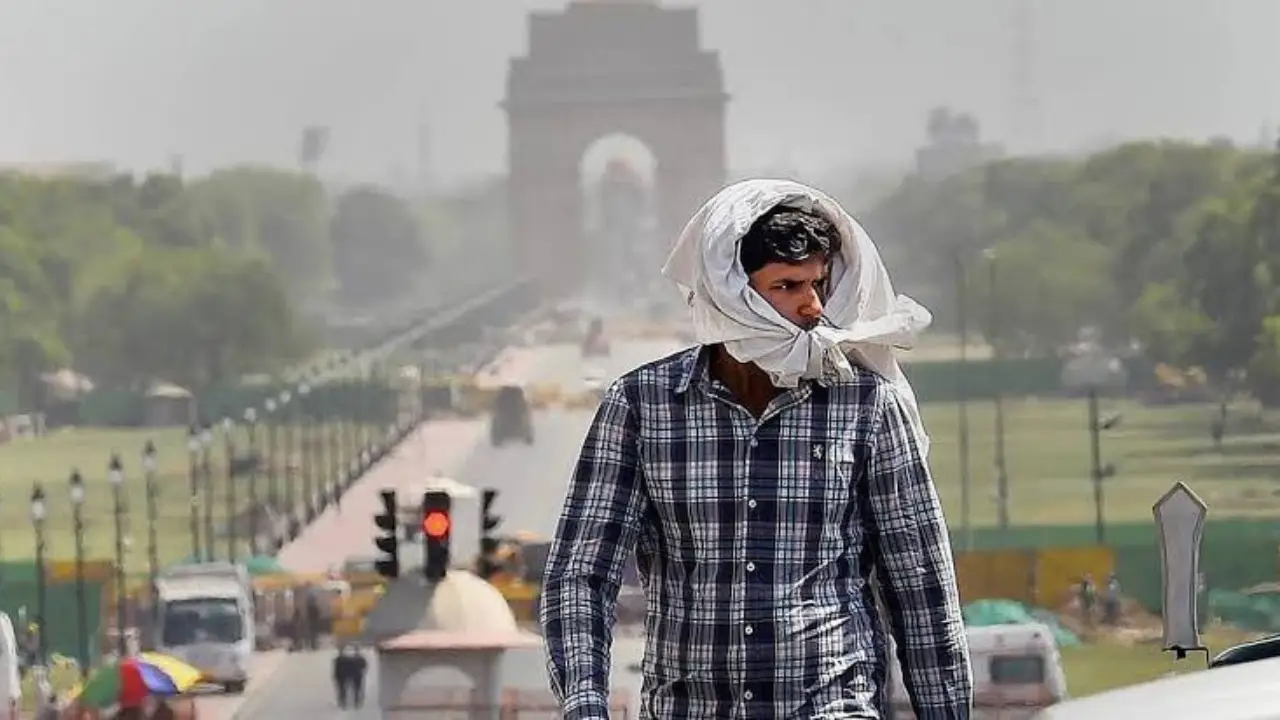
New Delhi: Over the last 10 years, land surface temperatures in several areas of Delhi have been rising rapidly. Envirocatalysts—an independent think tank—made this startling revelation following an analysis of satellite data. In the month of April, Delhi's average Land Surface Temperature (LST) has increased by 3.5 degrees Celsius.
In some wards, this increase has exceeded 6 degrees Celsius. This clearly indicates that "hyperlocal heat"—or pockets of extreme heat at the local level—are emerging across Delhi, which could pose a major challenge for the city in the coming years.
According to the think tank's report, the Bhati ward in South Delhi witnessed the highest rise in land surface temperature during April, recording an increase of 6.1 degrees Celsius. This was followed by increases of 5.9 degrees in Madanpur Khadar East and Badarpur; 5.7 degrees in Gautampuri; and 5.4 degrees Celsius in Mithapur, Deoli, Sangam Vihar-B, and Saidulajab.
These areas have experienced rapid construction activity. Green cover has diminished, leading to a rise in local temperatures. Conversely, in the Mubarakpur and Nithari wards of North-West Delhi, temperatures have actually decreased slightly—by 0.6 and 0.4 degrees Celsius, respectively. The minimal change was observed in Rani Khera and Sabarpur.
What is Land Surface Temperature (LST)? Why is it important?
Land Surface Temperature (LST) refers to the temperature of the ground surface at locations where sunlight falls directly. Air temperature is typically lower than the LST. Satellite data helps identify which specific areas of a city are experiencing the most significant rise in heat. Sunil Dahiya, Founder and Lead Analyst at Envirocatalysts, stated that this data assists in identifying locations where localized heat adaptation plans need to be formulated.
According to Sunil Dahiya, there are several factors contributing to the rise in heat. The primary cause is changes in land use. Areas that once featured parks, water bodies, or small patches of greenery have now been replaced by concrete buildings, roads, and shopping malls. Construction materials—such as concrete, granite, and metal—absorb significant amounts of heat, which they subsequently release. This phenomenon leads to a rise in "hyperlocal heat" at the local level. The depletion of green spaces and the accelerating pace of urbanization are also primary contributing factors.
What is the UTCI, and why does it matter?
The report also references the UTCI (Universal Thermal Climate Index). This is an international index that quantifies the level of heat stress experienced by humans. It takes into account not only the ambient temperature but also factors such as humidity, wind speed, and solar radiation.
In Delhi, the UTCI rose by 3.4 degrees during the month of April. This index serves as a valuable tool for health departments, urban planning agencies, and heat mitigation initiatives, as it provides insight into the actual heat levels experienced by the public. Sunil Dahiya noted that while attention is currently focused on pollution, serious measures must also be taken to address the issue of rising heat.
Green cover should be expanded in the wards experiencing the most significant rise in temperatures. Parks and small water bodies must be preserved. Construction projects should prioritize the use of natural materials whenever possible. Roofs should be painted with light colors or reflective coatings to minimize heat absorption. Additionally, more heat shelters can be established to provide relief to the public during hot weather.
What is Dashboard Developed for the Public?
EnviroCatalysts has developed a dashboard that allows the general public to view real-time data regarding the land surface temperature in their specific localities. This tool will enable both residents and local administrative bodies to stay informed about the heat conditions in their respective areas. Over the past decade, heat levels in Delhi have been rising rapidly; in some wards, temperatures have increased by as much as 6 degrees.
If green spaces are preserved in a timely manner, urbanization is managed through systematic planning, and localized strategies for combating heat are implemented, the city will be better equipped to cope with future summer seasons. Conversely, Delhi risks becoming even hotter and increasingly less habitable. This data is both a warning and an opportunity for the government.


