

China Driven Out Of Balochistan As Baloch Rebels Bring Pakistan Army To Its Knees; Is CPEC Project Over?
Baloch insurgents in the Balochistan province of Pakistan have brought the Pakistan Army led by Field Marshal Asim Munir to its knees.


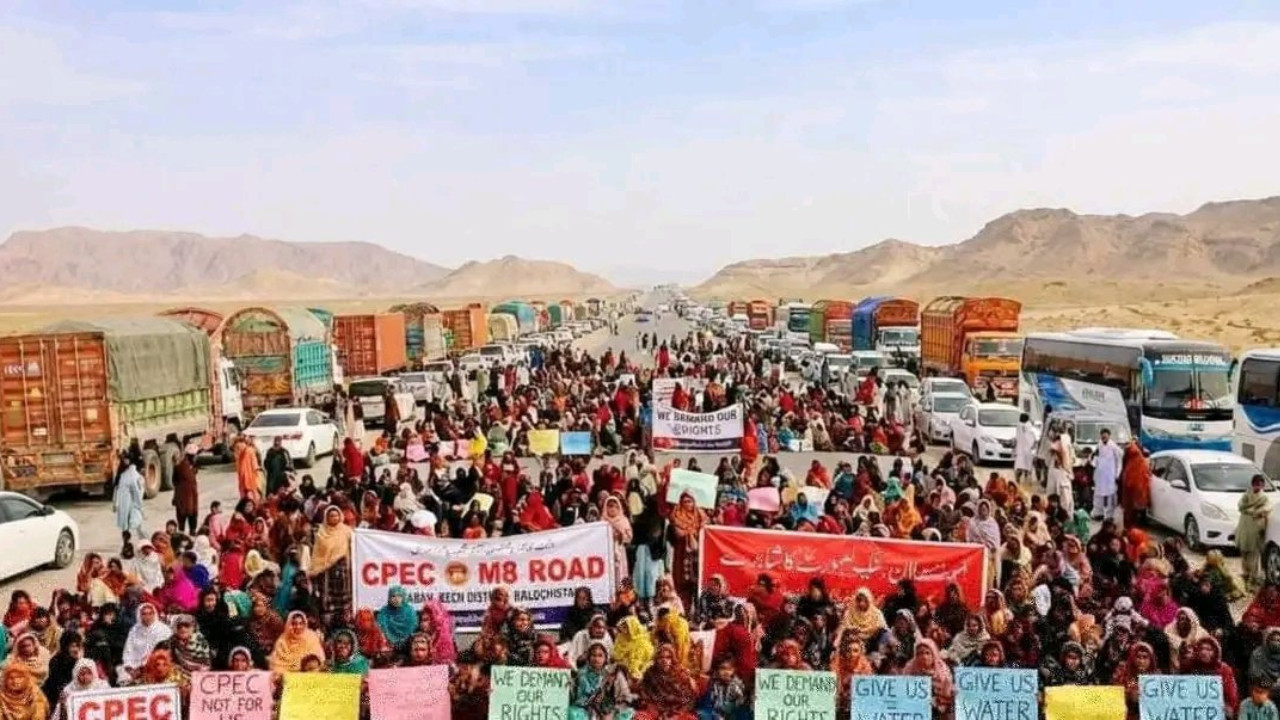
Islamabad: Baloch insurgents in the Balochistan province of Pakistan have brought the Pakistan Army led by Field Marshal Asim Munir to its knees. According to media reports, BLA fighters have driven out the Pakistani army and seized control of several camps and checkpoints. More than 10 districts are now under BLA control. Furthermore, reports indicate that Pakistan has suspended all its ground operations in Gwadar. Given the continuous attacks targeting Chinese projects in Balochistan, the Xi Jinping government of China has made a major decision.
What is the report on CPEC?
The deepening political and security instability in Pakistan is raising serious questions about the future of China's much-touted China-Pakistan Economic Corridor (CPEC). According to a report, China may have to reconsider the scope of its engagement with Pakistan if Chinese officials cannot travel safely to Islamabad. Currently, every new challenge facing Islamabad is becoming a threat to the progress of CPEC and undermining Beijing's multi-billion dollar investments in the region.
Who released the report on CPEC?
The report by the Italian Institute for International Political Studies (ISPI) states that China's ambitions to consolidate its hold on Afghanistan and Pakistan and create an economically prosperous and stable region on its western and southwestern borders appear to be becoming more difficult due to recent developments.
What is the role of Pakistan-Taliban conflict?
The report recalls that tensions between Pakistan and the Afghan Taliban reached a peak in October 2025, when deadly missile attacks occurred on the shared border between the two countries. Relations between Pakistan and the Afghan Taliban have been steadily deteriorating since the Taliban's return to power in Kabul in September 2021.
Why is China's $62 billion at stake?
According to the report, "After placing a $62 billion bet on Islamabad nearly a decade ago, Beijing is now deeply concerned about stability in the region. Pakistan's troubles are steadily increasing amidst rising domestic insurgency and a hostile neighborhood, which is a cause for concern for China." Under CPEC, China has significantly increased its economic investment in Pakistan. For Beijing, the main objective of CPEC is to ensure direct access to the Arabian Sea through a network of infrastructure, centered on the Gwadar port in Balochistan province.
However, the report clarifies that the ongoing internal unrest in Pakistan is preventing China from reaping the expected benefits from its investments. This has affected several CPEC projects and stalled progress on multiple fronts.
What is the role of BLA-TTP attacks?
The continuous attacks by the Balochistan Liberation Army (BLA) in Balochistan have created serious obstacles to key CPEC projects, particularly the development of the Gwadar port. The security situation deteriorated to such an extent that the inauguration of the CPEC-funded Gwadar airport in the latter half of 2024 had to be conducted online due to security threats to senior officials. Furthermore, Pakistan is also facing a serious security challenge from the Tehrik-i-Taliban Pakistan (TTP). According to reports, the TTP has consistently targeted Pakistani security forces and Chinese infrastructure projects in Khyber Pakhtunkhwa.


